
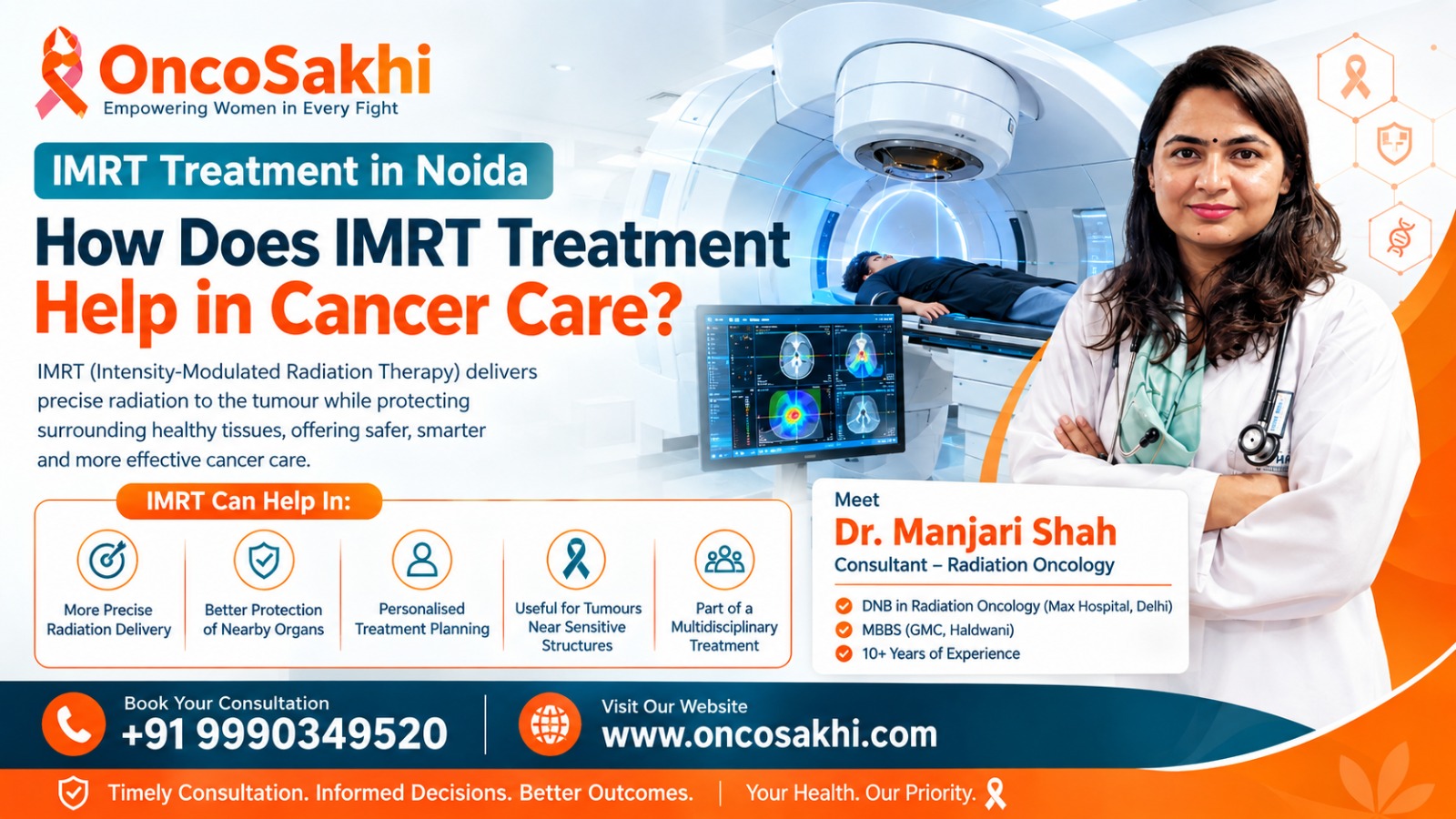
IMRT Treatment in Noida: How Does IMRT Treatment Help in Cancer Care?
A cancer diagnosis can bring many questions to a patient and their family: Can cancer be cured? What treatment is right for me? Will radiation damage healthy tissues? How can treatment be made more precise?
Modern radiation oncology has made significant advances in answering these concerns. One such advanced technique is IMRT (Intensity-Modulated Radiation Therapy), which allows radiation oncologists to deliver carefully planned radiation doses to a cancerous area while reducing unnecessary exposure to nearby healthy tissues.
For selected cancers, IMRT can be an important part of a curative treatment plan. Depending on the type, stage, location, and overall condition of the patient, radiation therapy may be used alone or together with surgery, chemotherapy, immunotherapy, or other treatments.
What Is IMRT Treatment?
IMRT stands for Intensity-Modulated Radiation Therapy. It is an advanced radiation treatment technique in which the intensity of radiation beams can be adjusted according to the shape and location of the tumour.
Unlike conventional radiation techniques that may deliver a more uniform dose across a treatment field, IMRT uses multiple carefully planned radiation beams with different intensities. This allows the radiation oncology team to create a highly precise treatment plan.
The goal is simple:
Deliver the required radiation dose to the tumour while protecting nearby healthy organs as much as possible.
This precision can be particularly valuable when a tumour is located close to sensitive structures such as the brain, spinal cord, salivary glands, eyes, kidneys, bowel, bladder, or other critical organs.
How Can IMRT Help in Cancer Treatment?
The effectiveness of cancer treatment depends on many factors, including the cancer type, stage, tumour characteristics, treatment plan, and patient’s overall health.
IMRT does not mean that every cancer will be cured. Instead, it provides radiation oncologists with greater control over where and how radiation is delivered.
In cancers where radiation is intended to eliminate the tumour, IMRT may form part of a curative-intent treatment plan.
It may also be used to:
- Treat cancer that cannot be safely removed completely with surgery
- Reduce the risk of cancer returning after surgery
- Treat certain locally advanced cancers
- Deliver radiation to tumours located close to sensitive organs
- Improve the precision of radiation delivery
- Help reduce radiation exposure to surrounding healthy tissues
- Provide symptom relief in selected advanced cancers
The treatment plan is always individualised according to the patient’s diagnosis.
Why Precision Matters in Radiation Therapy
Radiation is designed to damage the DNA of cancer cells so that they lose their ability to grow and multiply. However, healthy cells within or near the treatment area can also receive radiation.
This is why precision is an important part of modern radiation oncology.
With IMRT, radiation beams can be shaped and their intensity adjusted to better match the three-dimensional shape of the target. Advanced treatment planning software helps the radiation oncology team determine the most appropriate dose distribution.
This approach can be particularly useful when the tumour has an irregular shape or is positioned near an important organ.
IMRT Treatment in Noida: Advanced Radiation Care
Patients looking for IMRT Treatment in Noida may benefit from consulting an experienced radiation oncologist who can assess their cancer diagnosis, stage, imaging, previous treatments, and overall health before recommending the most appropriate radiation technique.
At OncoSakhi, Dr. Manjari Shah provides advanced IMRT Treatment in Noida, along with personalised radiation oncology care.
Dr. Manjari Shah is a highly skilled Consultant Radiation Oncologist with over a decade of dedicated experience in oncology. She holds a DNB in Radiation Oncology from Max Super Speciality Hospital, Delhi, and an MBBS from GMC, Haldwani.
Her professional experience includes associations with reputed institutions such as Sir Ganga Ram Hospital, Delhi; Max Hospital, Delhi; Jaypee Hospital, Noida; and Yatharth Hospital, Noida.
Dr. Manjari Shah – Radiation Oncology Expertise
Dr. Shah specialises in several advanced radiation therapy techniques, including:
- IMRT
- IGRT
- VMAT
- SRT
- SRS
- SBRT
- Brachytherapy
- Adaptive Radiation Therapy
Her approach focuses on combining modern radiation technology with careful treatment planning and compassionate patient care.
Every cancer patient is different. Therefore, selecting a radiation technique is not simply about choosing the newest technology. The treatment should be based on the cancer’s type, stage, location, treatment objective, and the patient’s individual medical needs.
Can IMRT Cure Cancer?
One of the most common questions patients ask is: “Can IMRT cure cancer?”
The answer depends on the individual cancer.
IMRT itself is a radiation delivery technique, rather than a separate type of cancer cure. In cancers where radiation therapy can eliminate the disease, IMRT may be used as part of a curative treatment approach.
For example, radiation therapy can play an important role in the treatment of several cancers, including selected cancers of the head and neck, prostate, brain, breast, gastrointestinal tract, and other areas.
However, whether treatment can achieve a cure depends on several factors, particularly:
- Type of cancer
- Stage of cancer
- Size and location of the tumour
- Whether cancer has spread to other parts of the body
- Response to treatment
- Overall health of the patient
- Whether surgery, chemotherapy, immunotherapy, or other treatments are also required
Therefore, patients should discuss their individual prognosis and treatment goals with their oncology team rather than assuming that a particular radiation technique guarantees a cure.
What Are the Potential Benefits of IMRT?
When appropriately planned and delivered, IMRT can offer several important advantages.
1. More Precise Radiation Delivery
IMRT allows radiation oncologists to adjust beam intensity and shape radiation around the target.
2. Better Protection of Nearby Organs
The treatment plan can be designed to minimise radiation exposure to selected healthy tissues surrounding the tumour.
3. Personalised Treatment Planning
Modern imaging and computer-based treatment planning allow the radiation team to develop a treatment plan specific to the patient’s anatomy.
4. Useful for Tumours Near Sensitive Structures
IMRT can be particularly valuable when the tumour is close to critical organs where avoiding unnecessary radiation is important.
5. Part of a Multidisciplinary Cancer Treatment
Depending on the cancer, IMRT may be combined with surgery, chemotherapy, immunotherapy, or other cancer treatments.
Is IMRT Suitable for Every Cancer Patient?
No.
IMRT is an advanced technique, but advanced does not automatically mean appropriate for every patient.
Some patients may benefit from other radiation techniques or treatment approaches. The decision should be made after reviewing diagnostic scans, pathology reports, cancer stage, previous treatments, and the patient’s overall medical condition.
A radiation oncologist can explain why a particular technique is recommended and what the expected benefits and possible side effects are.
Research and Patient-Centred Cancer Care
Dr. Manjari Shah’s work extends beyond clinical treatment. She has been involved in research resulting in publications in national and international journals, including work related to end-of-life care and sexual rehabilitation for cancer patients.
She is also a lifelong member of the Association of Radiation Oncologists of India (AROI).
Beyond hospital-based care, Dr. Shah has been involved in cancer screening programmes and health camps, particularly in underserved communities. Her commitment to community health was recognised with the National Youth Icon Award in 2018.
Choosing the Right Radiation Oncologist
Choosing cancer treatment can feel overwhelming. Patients should look for a radiation oncologist who combines clinical experience with modern treatment techniques and a patient-centred approach.
If you are considering IMRT Treatment in Noida, an expert consultation can help determine whether IMRT is appropriate for your cancer and whether radiation is intended to cure, control, or relieve symptoms.
At OncoSakhi, Dr. Manjari Shah combines experience in radiation oncology with advanced treatment techniques to provide personalised cancer care.
Take the Next Step in Your Cancer Treatment
Cancer treatment is not a one-size-fits-all process. The right treatment depends on the individual patient and their cancer.
If your doctor has recommended radiation therapy, ask about the available treatment techniques and whether IMRT Treatment in Noida could be suitable for your condition.
Early consultation, accurate diagnosis, personalised treatment planning, and timely cancer care can make an important difference in the treatment journey.
Consult Dr. Manjari Shah at OncoSakhi to understand your radiation treatment options and whether IMRT may be appropriate for your cancer.