
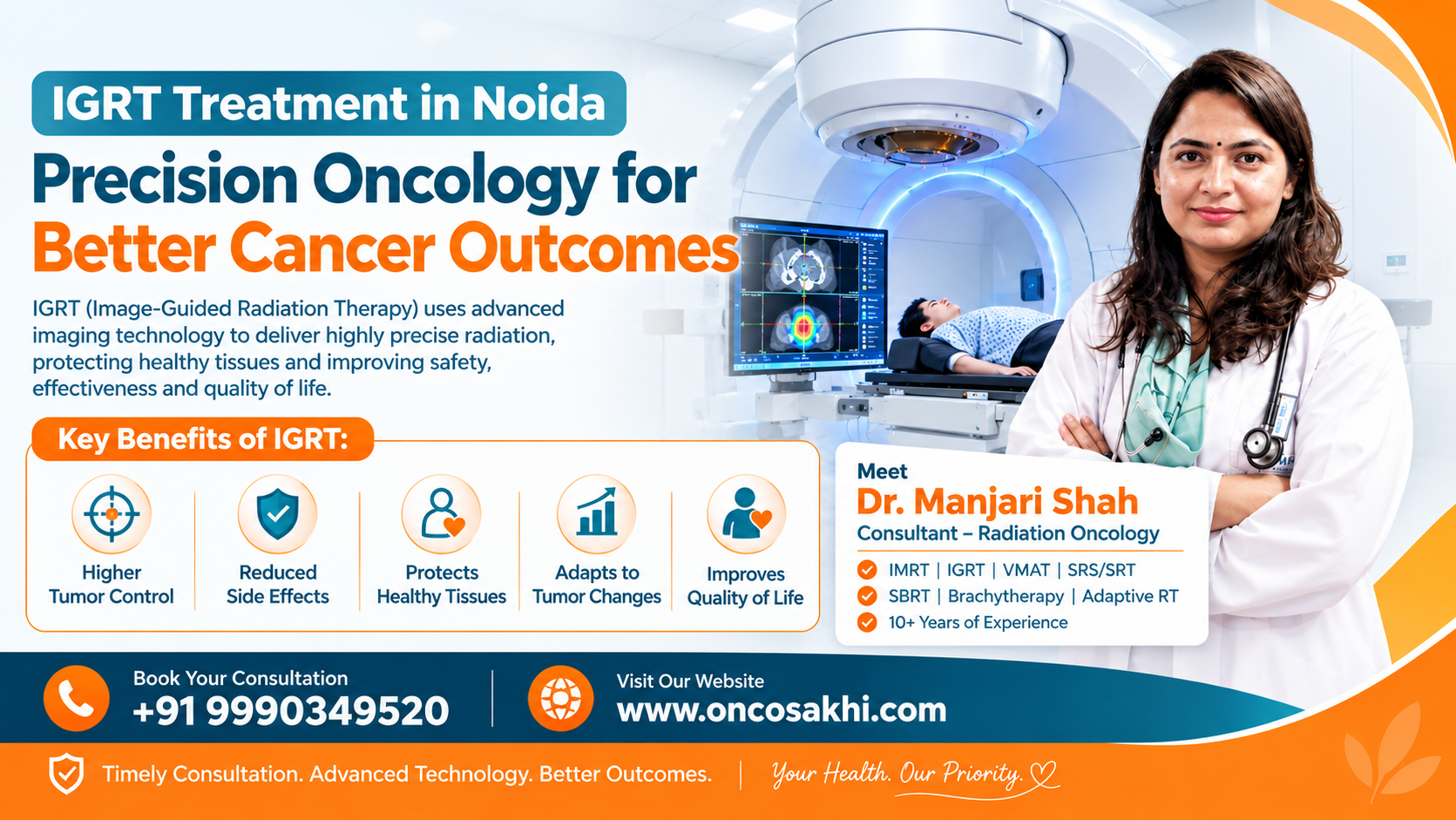
Cancer treatment has evolved dramatically over the last few decades. Gone are the days when radiation therapy meant treating a wide area of the body, often causing significant collateral damage to healthy tissues. Today, modern radiation oncology focuses heavily on precision, safety, and maximizing tumor control while preserving a patient’s quality of life.
Among the cutting-edge modalities transforming cancer care, Image-Guided Radiation Therapy (IGRT) stands out as a major breakthrough. For patients seeking world-class healthcare infrastructure, Noida has emerged as a prominent medical hub in India. Advanced cancer centers in the city now offer state-of-the-art radiation technologies, making high-precision care accessible to patients from Delhi-NCR and beyond.
If you or a loved one are exploring options for cancer treatment, understanding how IGRT Treatment in Noida works can help you make informed decisions. For comprehensive guidance and resources on modern oncology, you can also explore platforms like OncoSakhi.
What is IGRT (Image-Guided Radiation Therapy)?
Image-Guided Radiation Therapy (IGRT) is an advanced form of external beam radiation therapy that utilizes frequent imaging during the course of treatment.
When a patient undergoes standard radiation therapy, a treatment plan is mapped out meticulously during a simulation phase. However, human bodies change daily. Organs shift position, bladders fill up, bowels move, and even a patient’s weight can fluctuate over weeks of daily sessions. Furthermore, minor shifts in positioning from day to day can cause the radiation beam to miss part of the tumor or hit healthy surrounding tissue.
IGRT solves this challenge by integrating imaging technology directly into the linear accelerator (the machine that delivers radiation). Before or even during each treatment session, high-resolution scans—such as Cone-Beam CT (CBCT), X-rays, or ultrasounds—are taken right on the treatment couch.
These images are instantly compared against the original reference planning scans. If the medical team notices any internal or external movement, adjustments are made immediately to align the patient precisely, ensuring that the high-dose radiation strikes the target with pinpoint accuracy.
Why is Precision Important in Radiation Therapy?
The primary objective of radiation therapy is simple: destroy cancer cells by damaging their DNA while sparing normal, healthy organs (such as the heart, lungs, spinal cord, or bladder).
Traditional 2D and 3D conformal radiation techniques often struggled with targeting tumors that moved naturally with breathing or digestion (such as lung, prostate, liver, or pancreatic tumors). To compensate for this movement, doctors had to establish wider safety margins, treating larger volumes of tissue than necessary, which led to heightened side effects.
With IGRT treatment in Noida, these safety margins can be safely reduced because the position of the tumor is verified in real-time. Benefits of this high level of precision include:
- Higher Tumor Control: Higher doses of radiation can be safely concentrated directly onto the tumor without increasing toxicity to nearby structures.
- Reduced Side Effects: Minimizing radiation exposure to healthy tissues lowers acute and long-term side effects, leading to a smoother recovery and better functional outcomes.
- Adaptability: It allows oncologists to track changes in tumor size and shape over the treatment cycle, ensuring consistent accuracy.
Conditions Frequently Treated with IGRT
IGRT is versatile and plays a crucial role in managing various solid tumors throughout the body, particularly those located close to critical, radiation-sensitive organs. Some common applications include:
- Prostate Cancer: The prostate sits right between the bladder and rectum, both of which change positions frequently. IGRT ensures the radiation hits the prostate accurately while sparing surrounding structures, reducing urinary and bowel complications.
- Lung Cancer: Because tumors in the chest move continuously with every breath, IGRT combined with respiratory gating helps track and target the tumor accurately.
- Head and Neck Cancers: These regions involve complex anatomy packed with vital nerves, salivary glands, and the spinal cord. Precision delivery protects speech, swallowing, and salivary function where possible.
- Brain and Spine Tumors: Protecting delicate neural tissue is paramount. IGRT ensures millimeter-level accuracy for intracranial and spinal lesions.
- Gastrointestinal Cancers: Tumors in the liver, pancreas, and gastrointestinal tract shift due to digestion; image guidance helps isolate these moving targets.
What to Expect During an IGRT Treatment Journey
Undergoing radiation therapy can feel intimidating, but knowing what to expect can ease anxiety. A typical IGRT pathway involves several key stages:
- Initial Consultation: A qualified radiation oncologist evaluates your medical history, pathology reports, and diagnostic scans to determine if IGRT is the ideal approach for your specific diagnosis.
- Simulation and Mapping: If IGRT is selected, you will undergo a simulation session. This involves creating custom immobilization devices (such as molds or masks) to keep you comfortable and still. A planning CT scan is then performed.
- Dosimetric Planning: Medical physicists and radiation oncologists use sophisticated software to design a customized 3D treatment plan that dictates the exact radiation dose and angles.
- Daily Treatment Sessions: During the actual sessions, you will lie on the treatment table. Imaging scans are taken first to verify alignment. Once verified, the linear accelerator delivers the radiation. The delivery itself is entirely painless and usually takes only a few minutes, though you may be in the room for 15–20 minutes total.
- Follow-up Care: Regular monitoring post-treatment ensures recovery is on track and allows your care team to manage any side effects effectively.
Choosing Advanced Cancer Care in Noida
Noida has rapidly grown into a prominent medical destination, equipped with world-class hospitals, advanced linear accelerators, and comprehensive cancer care units. Patients no longer need to travel to metropolitan centers for sophisticated therapies like IGRT, IMRT, VMAT, and SBRT, as cutting-edge technology is readily available locally.
Navigating a cancer diagnosis requires more than just advanced machines; it demands deep clinical expertise, empathy, and personalized treatment planning. Finding the right specialist who stays at the forefront of modern oncology innovations is vital to achieving the best possible clinical outcomes.
Consult Dr. Manjari Shah – Leading Radiation Oncologist in Noida
When seeking expert care and precision-guided radiation therapies like IGRT, consulting an experienced and dedicated specialist makes all the difference.
Dr. Manjari Shah is a highly respected Consultant Radiation Oncologist practicing in Noida and Greater Noida. With over a decade of dedicated experience in oncology, Dr. Shah has built a strong reputation for combining clinical excellence with compassionate, patient-centric care.
Her clinical expertise spans a wide spectrum of advanced radiation techniques, including IMRT, IGRT, VMAT, Stereotactic Radiosurgery (SRS/SRT), SBRT, Brachytherapy, and Adaptive Radiation Therapy.
If you or your loved ones are seeking expert medical guidance, second opinions, or structured radiation treatment plans tailored to your unique condition, booking a consultation with Dr. Manjari Shah can provide clarity, reassurance, and access to world-class cancer care.